
August 13-16, 2026
The Terence Dickinson Memorial Keynote Speaker
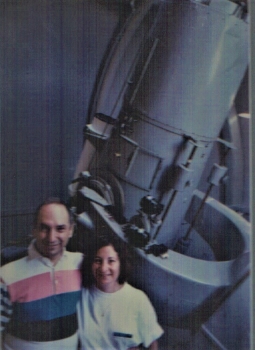
Dr. David H Levy, Wendee's Husband
Sponsored by Astronomy Plus
All he cares about are his damned stars!: From mildly autistic teenager to seeing the poetry that brightens the night sky
David H Levy is arguably one of the most enthusiastic and famous amateur astronomers of our time. Although he has never taken a class in astronomy, he has written about 40 books, has written for three astronomy magazines and has appeared on television programs featured on the Discovery and the Science Channels. Among David’s accomplishments are 23 comet discoveries, the most famous being Shoemaker-Levy 9 that collided with Jupiter in 1994, a few hundred shared asteroid discoveries, an Emmy for the documentary Three Minutes to Impact, five honorary doctorates in Science and a PhD from the Hebrew University of Jerusalem (2010) which combines astronomy and English Literature. Currently, he is the editor of the web magazine Sky’s Up!, has a monthly column, Skyward, in the Vail Voice paper. David continues to hunt for comets and asteroids, and lectures worldwide.
A short bio for a tall man
My passion for the night sky began at a camp in Vermont by a sighting of a faint meteor on 4 July 1956. As a young senior in high school I began searching for an activity that I could be reasonably good at, an activity that did not involvemy working and dealing with others. My sighting of Comet Ikeya-Seki in 1965 led me to begin a search for comets starting 17 December 1965. In 1976 I stumbled upon the wonderful relationship between the night sky and English poetry. I found my first comet in 1984 while searching in my home southeast of Tucson, Arizona. In 1993 the Shoemakers and I discovered Comet Shoemaker-Levy 9 that taught us so much about the geologic history of Jupiter, and by extension our home planet Earth. I am still somewhat shy but at age 78, my life is brightened by many close friends.
Keynote Speakers (alphabetically):
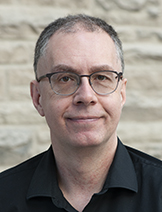
Dr. Peter Brown
Sponsored by Telescopes Canada
Seeing meteors without light
The word meteor refers to the light produced by a small solar system object as it careens into the atmosphere at extremely high speed, but also to all the other phenomena the collision produces. The meteoroid makes a trail of plasma by blasting electrons free of atoms, and those electrons can be detected by radio waves. As it compresses the air in front of it, the meteoroid generates a shock like a hypersonic aircraft, and the sonic boom can be joined by sounds made by explosive fragmentation as the meteoroid's strength is overcome by the pressure of the increasingly dense atmosphere. These sounds can be heard by nearby observers, and the low-frequency part of the sounds can travel long distances and be detected by specialized microphones, sometimes even around the world if the impact is large enough. The sound waves can also hit the ground and ocean and be detected as small tremors. All of these non-optical detection methods can give us unique insights into asteroids and comets, from the very large to the very small. I will highlight how the Western Meteor Physics Group uses them to learn more about our place in the solar system.
Biography:
Peter Brown is a Professor in the Physics and Astronomy Department at the University of Western Ontario in London, Ontario. He earned a BSc in Physics from the University of Alberta and a Master's and PhD in Physics from the University of Western Ontario, followed by a postdoctoral fellowship at Los Alamos National Labs in New Mexico. He research focuses of the origin and evolution of small bodies in the solar system, studying meteoroids to determine the distribution and properties of their parent asteroids and comets. He is a leading researcher in infrasound and radar observations of meteors.

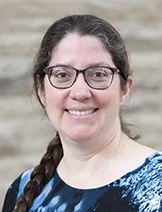
Dr. Margaret Campbell-Brown
Sponsored by Telescopes Canada
Seeing meteors with light
When a meteoroid collides with the Earth's atmosphere, it generates light from both the atmosphere and its own atoms as they boil off. When we observe the light from two or more stations, we can find out many interesting things about individual meteoroids. The path the meteor takes and its speed show us where it was in the solar system just before it collided with the Earth, and can help determine if it came from an asteroid or a comet. The height where it starts where it ends tell us how hard it was to heat and how strong it is. With high-resolution observations, we can watch even very small meteoroids break into pieces, and learn about how they are put together. The spectra of meteors can also help us figure out what they are made of. I will talk about the different ways the Western Meteor Physics Group uses light from meteors to learn more about how the solar system came to be.
Biography:
Margaret Campbell-Brown is a Professor in the Physics and Astronomy Department at the University of Western Ontario in London, Ontario. She holds a BSc in Physics from Mount Alison University and a PhD in Physics from the University of Western Ontario. She has been a postdoctoral fellow at the European Space Agency in the Netherlands, and at the University of Calgary. Her research explores the distribution and composition of small meteoroids, with emphasis on what they can tell us about the origin and evolution of the solar system.
Dr. Peter Brown & Dr. Margaret Campbell-Brown
Catching Falling Stars – Adventures in Meteorite Recovery in Canada
There have been 19 meteorite falls recorded in Canada since the mid-19th century. Almost half of these have occurred since 1977. The speakers have been directly involved in half a dozen of the most recent Canadian meteorite falls. In this talk we will describe the experience of recovering meteorites from falls as varied as the St.Robert meteorite shower in 1994, a fragment of which almost hit a cow, the unique Tagish Lake meteorite which was recovered on lake ice in 2000 and the 2021 Golden meteorite fall which landed on a bed. The talk will also highlight the science which has subsequently been done on these Canadian meteorite falls and what they have told us about the formation and evolution of small bodies in the early solar system.
Guest Speakers (alphabetically):
Marty Anderson & Keith Mombourquette
Are you tired of cloudy light-polluted skies? Driving long distances to dark-sky locations? Have you ever considered a remote-hosting site? Our Journey to Starfront Observatories in Texas!
If you have a reliable system which you can operate trouble-free, then you may be a candidate to send your system to a remote-hosted facility, such as Starfront Observatories near Brady TX. Marty and Keith have recently deployed two systems to Starfront and will be describing what is involved and what their experience has been to-date. They will describe what you need for a remote-controlled system, how to ship your system, what it costs to have a remote system, how it gets installed, how you connect to your system, nuances of remote operation, how to get your data, and what happens when something doesn’t work as expected. If you are interested in deploying a remote system under clear dark skies, then come along and bring your questions.
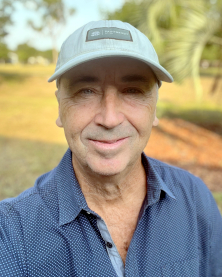
Marty Anderson Biography:
Marty Anderson is an avid amateur astrophotographer, who took up the hobby about 4 years ago. He is a trained/schooled jazz-pianist and professional musician, having toured the country and the world with the likes of Rik Emmett (of Triumph), Michael Burgess (Les Miserables, etc), and crooner Matt Dusk - but this background of course didn’t help much regarding capturing the wonders of the cosmos or the incredible learning-curve of this new obsession - other than maybe the passion to learn and practice and achieve! He is looking forward to attending Starfest for a 4th time this year, as well as now having enough experience to be able to share some of what he has learned with his fellow astro-enthusiasts!
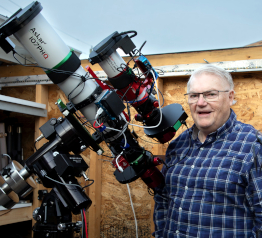
Keith Mombourquette Biography:
Keith came to Astrophotography late in life. It started as an extension to his nature photography one night in March of 2022. On a whim, after photographing the northern lights he decided to turn his camera to the sky to see if he could capture an image of the Orion Nebula. He was delighted when he got home and stacked the 10 frames he had collected and was able to see the nebula. The next night he was out under the stars with his camera and lens mounted to a star tracker to try for a better image. From that point on, he was hooked.
Keith is a Professional Engineer who loves to apply his engineering skills to many aspects of his hobbies. He has used those skills to design and construct a roll-off-roof observatory which he uses any time that the sky is clear – even if only for a few hours at a time.
Keith’s images are well received by family and friends, and the local community, with whom he regularly shares them.
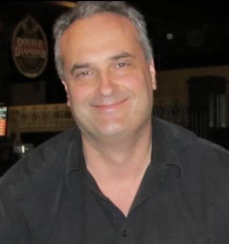
Steve Barnes
A Brief History of Astrophotography
This talk explores my 35-year journey in astrophotography, tracing the remarkable evolution of equipment and techniques—from early film-based imaging to today’s advanced digital and robotic systems. Along the way, I’ll highlight key breakthroughs that have transformed how we capture the night sky and reflect on just how far the field has come. I’ll also share insights into where astrophotography may be headed next.
Biography:
Stephen Barnes has been an amateur astronomer since childhood. He pursued his passion for astronomy at York University, followed by a career in the telescope retail industry. He later became involved in building and installing robotic observatories in the Atacama Desert in Chile.
Steve is an award-winning astrophotographer whose work has been featured in magazines, books, and calendars, as well as NASA’s Astronomy Picture of the Day (APOD).
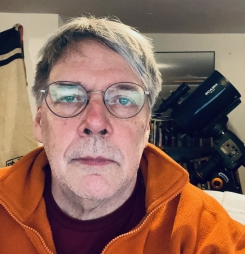
Andy Beaton
The Sky Tonight
“I’ve looked at the Moon and Saturn. Now what?” Is this you? It’s a question I get asked a lot with people who are new to astronomy, or have just shown up for an evening’s observing without a spreadsheet of all their planned observations. I’ll be talking about what we can see in the sky tonight, leaning towards the less experienced audience but throwing in a few treats for the more seasoned observers. Some of the topics will be specific for tonight, others can be taken away for future clear skies, just in case the clouds are not kind to us. Will you be observing with the good old Mark I eyeball, or a telescope you need a ladder to use? There should be something here for you to take into tonight's sky.
Biography:
Andy has been a dedicated amateur astronomer since he was 10, when his grandmother gave him a map of the universe for his birthday. Although a degree in astrophysics from U of Toronto did not lead to a career in astronomy, it did lead to a desire to do more in astronomy than observe for pleasure and into the exciting world of variable star measurement.
It also left him with a wealth of astronomical knowledge and a willingness to share it, leading to an active role in outreach and presentations at the RASC. His semi-regular Sky This Month talks are the logical end of his desire to talk about astronomy to anyone who will listen.
Dr. Ron Brecher
Photons to Photos
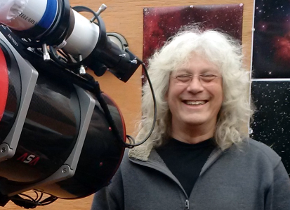
In this two-hour workshop I will process a data set from beginning to end, highlighting some of the most important new tools and techniques, both built in, and third-party extensions. While this workshop is geared to intermediate and advanced PixInsight users, beginners are also encouraged to attend to see what is possible with this powerful program.
Biography:
Ron Brecher has been an avid amateur astronomer for more than 25 years and began photographing the sky in 2004. Ron is a Contributing Editor for Sky & Telescope magazine and writes for several other publications. His deep-sky, Sun and Moon images and articles are regularly featured in books, magazines, scientific journals, calendars and more.
Ron uses PixInsight for processing his deep-sky shots. He offers private tutoring, workshops, and video tutorials at mastersofpixinsight.com. Ron is a regular speaker at star parties and conferences in the U.S. and Canada.
Ron images from his home observatory in Guelph, Ontario where he and his wife Gail live with their dog Toby. In “real life,” Ron holds a PhD and is a board-certified toxicologist with more than 35 years’ consulting experience in toxicology, risk assessment and risk communication. To round things out, Ron plays guitar and lead vocals in the R&B Band “The Exceptions.”
Bryan Delodder & John Ceko
3D Printing Meets the Night Sky
Part mad inventor, part practical engineer- Bryan Delodder of TenTelescopes.com joins John Ceko to explore how 3D printing is quietly rewriting the rules of amateur astronomy. From fully functional telescopes to cleverly designed accessories, they’ll show how custom-built gear can outperform off-the-shelf solutions in cost, weight, and flexibility.
You may leave with a dangerous new habit: looking at your equipment and thinking, “I could make that.”
Bryan Delodder & the Ten Telescopes Team
The Hands-On Telescope Build Party
Build a telescope in an afternoon- and use it that same night.
This free, drop-in, hands-on workshop invites you to join a team and help assemble a high-performance 150mm or 203mm Newtonian telescope- choose to work on a simple, easy-to-use visual instrument or a serious astrograph for imaging—guided step-by-step by the Ten Telescopes team.
No experience needed- just jump in and be part of the build. Stay for 5 minutes or the whole afternoon- it’s up to you.
Want one of your own? Optional kits will be available for purchase in colours you select for yourself, but there’s no pressure. You’re just as welcome to come learn, build, and enjoy the process.
That evening, the telescopes will be set up under the stars so you can experience what you helped create.
John Ceko Biography:
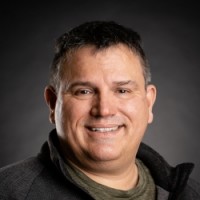
Even in middle school, John knew his future was in STEM. He set that path in motion early by attending Danforth Technical School in Toronto, eventually earning his Bachelor of Applied Science in Mechanical Engineering from the University of Toronto in 1987.
In 1990, John earned his P.Eng. designation with the Professional Engineers of Ontario while working at Dofasco in Hamilton. In 1998, he transitioned to Husky Injection Molding Systems in Bolton, where he spent over 20 years specializing as a structural analyst with a focus on Finite Element Analysis (FEA).
Since retiring in 2020, John has traded industrial-scale analysis for the precision of astrophotography. After a fellow astro-enthusiast introduced him to 3D printing, he took to it like a fish to water. Today, he leverages his engineering expertise to design and fabricate custom components, creating numerous solutions to optimize both his own astro rigs and those of his friends.
Bryan Delodder Biography:
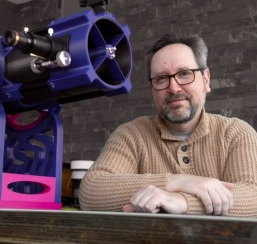
After a crash ended his career in tech, Bryan found himself rebuilding life from a hospital bed—with a stubborn refusal to stop asking why things are the way they are. During a long recovery, he had a 3D printer delivered to his hospital room and started learning design and CAD.
It started with a simple idea—a telescope his 12-year-old niece could build—and quickly grew into experiments, iterations, and a line of telescopes that rethink what a DIY telescope can be. Instruments that can shift from visual use to a serious astrograph in an afternoon, and designs that are as colourful and personal as they are capable.
Through TenTelescopes.com and the public telescope library he founded, Bryan is on a mission to make astronomy more accessible, more hands-on, and far less intimidating—for anyone curious enough to try. You don’t need a machine shop or a physics degree… just a bit of curiosity and the willingness to say, “Why not me?”
Part mad inventor, part professional overthinker, Bryan is quietly (and sometimes not so quietly) redefining what a telescope can be.
Steve Dittmar
The ZWO Journey: Gear That Grows With You
Discover how ZWO's market-leading product line has evolved from its earliest innovations to the powerful ecosystem we know today. We'll explore the company's commitment to long-term support, examine the rigorous hardware and software quality processes that define its reputation, and highlight how these standards shape every product it releases. Finally, attendees will get a first look at several upcoming developments that point toward ZWO's near future.
Biography:
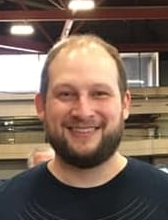
Steve Dittmar grew up in Upstate NY and has been a software engineer at IBM for over 23 years. He rediscovered his love of astronomy at NEAF in 2014, which quickly became a full-blown astrophotography obsession. Today, Steve is President and Webmaster of the Mid-Hudson Astronomical Association, Observatory Supervisor at Vassar College, an instructor at the Adirondack Sky Center and Observatory’s annual astrophotography workshop, and an active outreach volunteer at more than a dozen events each year. He has also been a long-time collaborator and advocate for ZWO at NEAF and various star parties over the years.
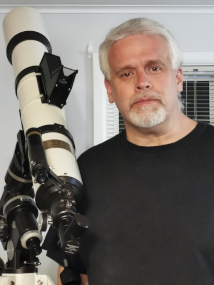
Marc Fitkin
Astronomy 101: Starting out right in Astronomy
Astronomy 101 will help the beginner astronomer navigate through equipment and literature to start them right in astronomy with the hope of cultivating a lifelong passion of the night sky. The presentation will be a mixture of lecture style and audience participation to help grow that passion.
Biography:
Marc's interest in astronomy began in his childhood as a result of a combination of the Space Shuttle Program, exposure to dark skies in Muskoka, and the film 2001: A Space Odyssey. For over 30 years, he has been enjoying nights with various telescopes and binoculars and worked in the astronomy and birding retail for over ten years. In 2019, Marc along with his wife and best friend Karen O'Kapiec-Fitkin began to look at starting a local astronomy meet up in their local village of Bronte in Oakville, Ontario. But like everything else, the world paused for the pandemic. In 2022, recognizing an opportunity and a village starving for community, Marc and Karen started The Bronte Astronomer, an informal meet up and community with public astronomy nights and an online community on Facebook with the intention of bringing astronomy to everyone in the local area and supporting existing astronomy clubs and associations.
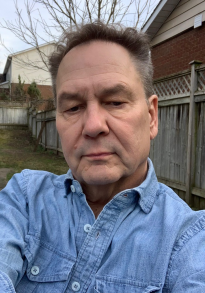
Dr. Brian McNamara
Supermassive Black Holes Really Do Exist!
The possibility that black holes exist in the Universe has been taken seriously only since the 1950s. The discovery of quasars in the 1960s, and the accompanying theoretical arguments describing why they should exist, led to the realization that supermassive black holes probably live at the centres of nearly all galaxies, including the Milky Way. Around the turn of 21st century we realized that supermassive black holes were not just exotic curiosities, but that they shaped the Universe as they grew by releasing enormous amounts of energy. Within the last decade, two nearly air-tight proofs of their existence emerged from the Event Horizon Telescope image of M87, the discovery of gravitational waves, and rapid motions of stars around the giant black hole at the centre of the Milky Way. I will present these and other discoveries from a variety of telescopes, including James Webb and the XRISM X-ray Observatory. I will try to convince you that you should care about supermassive black holes because your atoms will eventually end-up in one.
Biography:
Dr. Brian McNamara is Professor and former department chair in Physics & Astronomy at the University of Waterloo, in Ontario, Canada and former Director of the Guelph-Waterloo Physics Institute. He was appointed University Research Chair for two terms between 2008 and 2022. After receiving a PhD at the University of Virginia in 1991, McNamara took a postdoctoral fellowship at the Kapteyn Laboratory in Groningen, The Netherlands. From 1993 to 2000 he was a staff member at the Harvard-Smithsonian Center for Astrophysics. From 2000 to 2006, McNamara was a professor of Physics & Astronomy at Ohio University. McNamara has served as a professor of Physics & Astronomy at University of Waterloo since 2006.
McNamara studies galaxies and clusters of galaxies and spends his days trying to explain how they formed and evolved under the influence of powerful radio jets launched by supermassive black holes. His most recent work involves making the first measurements of the velocity fields of hot X-ray cluster atmospheres with the XRISM X-ray observatory and studying cold clouds accreting onto massive black holes using the James Webb Space Telescope. McNamara served on the XRISM X-ray science team representing Canada and the Resolve instrument team, which is XRISM’s micro-calorimeter spectrometer.
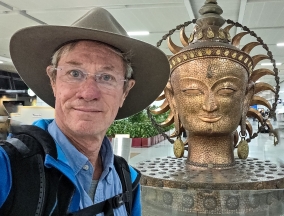
Dr. Greg Meyer
One Night, Many Outcomes: How a Single Night Under the Stars Becomes Timelapse, Star Trails, and Cinematic Video
One clear night. One camera on a tripod. Multiple finished products — timelapse footage, star trail images, comet trails, and short cinematic reels — all from the same capture session, while a telescope runs independently nearby.
Dr. Greg Meyer walks through how he extracts every possible result from a single night's data, compares tracked versus untracked sky motion, and shows how finished deep-sky images can be transformed into 15–30 second videos that are more compelling than any static image. Practical, visual, and tool-specific — with real examples shot in Arizona's dark skies.
Biography:
Greg Meyer, M.D. is an astrophotographer, educator, and retired physician based in Arizona. He is board certified in internal medicine, urgent care, and homeopathy, and spent many years practicing medicine before focusing more fully on astrophotography and night-sky education.
Working from the dark skies of Bortle 1 northern Arizona, as well as Bortle 9 Phoenix, he creates deep-sky images, nightscape photography, and time-lapse videos that reveal how motion and time transform our view of the night sky. His work has appeared in Sky & Telescope Magazine, Astronomy Magazine, Space.com, Astronomy Now, and Amateur Astronomy Magazine, and has been featured twice on AAPOD.
Greg has traveled to more than 35 countries and witnessed nine total solar eclipses, experiences that strongly influence his life and work. He loves combining his love of nature and the night sky with camping and travel throughout the US. Through talks, and online content, he shares practical techniques for capturing and processing astrophotography—from wide-field nightscapes to telescope-based deep-sky imaging.
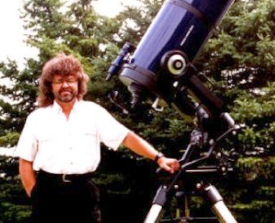
Glenn Norman
Catch a Falling Star - On TV
Glenn Norman looks back on how a chance encounter with amateur Astronomers at the 1958 CNE changed his life and led him to doing Public Outreach/Star Parties for the past Sixty-Five years. Realizing he’d need an income for new telescopes, Glenn became a Screenwriter and wrote for many TV shows, including 5 episodes for the 1980’s Disney Channel/CBC TV series, “Danger Bay.” But he couldn’t sell the Producers on his favourite story (about the search for a meteorite & the problems caused by Light Pollution.) After several failed attempts, he ended up (sorta’) “blackmailing” the Producers (in a funny way) to green-light the tale. Despite their reticence, they caved, and the result was, “Catch A Falling Star,” which ended up being one of the favourite episodes for that season. In this talk, Glenn explains how he did it
Biography:
I was hooked on Astronomy from the moment I first looked at the rings of Saturn during a 1958 CNE Star Party. I joined the RASC ($3 a year for students at that time). But as I was still a kid - the media “discovered” me, and I was even an “astro-guest-star” on the TV game show, “To Tell The Truth.” Skip forward to 2026 and – looking back – I’m amazed how those early years shaped my life. Working at “Star Parties” cured my shyness. I became a Pilot at 18 - bought an antique airplane – then became a Barnstormer, hopping rides from mid-west fields (and throwing “Star Parties” at the end of the day). I made my living as a TV-Show Creator/ Screenwriter/ Story Editor, which allowed me to move to the country (20 minutes from Starfest). These dark skies re-kindled my passion and I soon became “obsessed” with sneaking Astronomy themes into the TV shows I wrote. My favourite was Danger Bay episode “Catch A Falling Star,” which I “blackmailed” the Producer into shooting. I’ll tell you how I did it in Friday Morning’s talk.
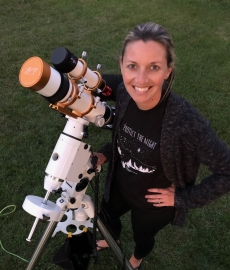
Ashley Northcotte
Citizen Science in Astronomy: How You Can Contribute to Research
Citizen science provides opportunities for amateur astronomers, astrophotographers, and curious beginners to take part in real scientific research. This session explores how people at all experience levels can get involved, breaking down what citizen science is, why it plays an important role in modern astronomy, and how everyday observations can support real discoveries or ongoing research. This session is ideal for anyone interested in astronomy, including those who want to better understand how research works, contribute their own observations, or find ways to share the experience with others, including family or community
Biography:
Ashley Northcotte is an astrophotographer, educator, and science communicator with AstroBackyard, where she creates beginner-friendly content to help people explore the night sky. With a background in education and experience in communications, outreach, and public engagement, she previously served as Communications Coordinator with the RASC. Ashley is also an Advocate and Delegate with DarkSky International and a DarkSky camping lead, contributing to dark sky advocacy through education, outreach, and community engagement. Through her work, Ashley shares the beauty of the night sky while helping others understand why it’s important to protect it.
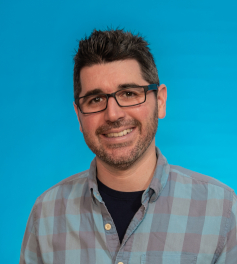
Dr. Jesse Rogerson
What can we learn from Interstellar Comets?
Spoiler Alert! It's not Aliens. Or at least, that's an incredibly unlikely conclusion. However, that does not make the three known interstellar comets any less interesting! Beginning in 2017, with 1I/'Oumuamua, followed by 2I/Borisov in 2019, and now 3I/ATLAS this past summer, astronomers are learning more and more about the universe beyond our solar system. In this talk, I will present the origin stories of each object, what we have learned, and where this may take us in the future.
Biography:
Jesse Rogerson is an Associate Professor at York University, in the Division of Natural Science. In this role, Jesse teaches a variety of astronomy and space science classes for non-science majors. He received his MSc and PhD in astrophysics from York University, with a specialization on quasars, and his HBSc from McMaster University. After completing his PhD, Jesse took his Education and Public Outreach experience and applied it the Museum and Science Centre industry. He held positions at the Ontario Science Centre, Telus Spark, and notably was the Science Advisor at the Canada Aviation and Space Museum in Ottawa. Now, back at York University, Jesse uses his extensive astrophysics and outreach experiences to generate conversations and engagement with the space sciences.
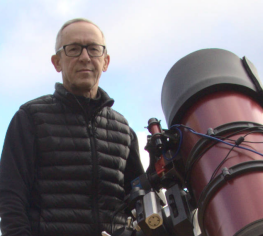
Rick Wagner
Image Processing with Siril
Siril is Rick's go-to program for stacking and processing his deep sky images. Siril is an open source application that runs on Linux, MacOS, and Windows. It provides virtually every tool you need to take your images from raw straight-from-the-camera to finished presentation/publication quality. It is a cutting edge program that has many of the latest tools available such as sophisticated sharpening, colour balance, star removal, stretching and gradient removal. Additional capabilites can be installed with downloadable scripts. And yet, with a few simple clicks one can quickly get a picture that will satisfy many imagers. Rick will present an overview of Siril to enable you to stack images and enhance them with many of the sophisticated tools available in this amazing open source package.
Biography:
Rick has been an avid amateur astronomer and RASC member for over 50 years. His interests in astronomy cover many fields: he has built several telescopes and observatories, observed or imaged over a hundred comets, measured the rotation periods of asteroids, imaged trans-neptunian objects and gamma ray burst afterglows, timed exo-planet transits, and observed over 1000 named objects on the Moon. But measuring the changing brightness of variable stars has been his primary focus for the past 15 years, having shot over 250,000 images. Occasionally Rick likes to take a break from scientific work to image deep sky objects and share the extraordinary beauty of the night sky.
Panel Discussion
Eyes on the Sky: Who gets to Look?
Telescopes don't discriminate — but history did. This panel explores the women who shaped our understanding of the cosmos, often without recognition, and asks a deceptively simple question: in a hobby and a science built on looking up, who has always had the clearest view?
From the Harvard computers who mapped the universe at thirty cents an hour, to the Black women of NASA who calculated the trajectories that sent men to the moon, to the women still navigating the quiet walls of astronomy clubs today — the pattern is remarkably consistent. Brilliant women. Overlooked contributions.
This panel calls on a community made up of genuinely passionate, generous people who love the sky with their whole hearts — to ask themselves an honest question: are we as welcoming as we believe ourselves to be?
who is holding the instrument — and who was never quite allowed to touch it.
Expect a Conversation that it candid, personal, and occasionally uncomfortable — in the best possible way.
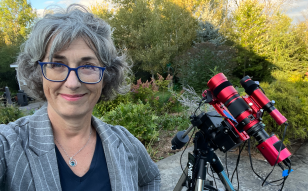
Andrea Girones Biography:
A life-long astronomer and eclipse chaser, it took a while for Andrea to transition from film to these new-fangled automated scopes and digital cameras. After a long hiatus from astroimaging raising her two children, it was Comet Neowise that brought her back to her beloved hobby.
Her astrophotography has won several awards, including the of Paul Commission Observer of the Year award, the Rolf Meir Planetary imager of the year, of her local RASC chapter, a WITNS selection from the late Alyn Wallace, as well as the Williamina Fleming award from the Astronomical League. She was honored to have been selected as the 2023 Imager of the Year at Starfest and was a judge of the 2024 contest.
Her images have appeared on the front (and back covers) of the Journal of the Royal Astronomical Society of Canada and on the cover of the 2024 RASC calendar. She often gives presentations to organizations on solar imaging, a particular fascination for her. Her first APOD (NASA Astronomy Photo of the Day) was of a solar filament tethered magnetically to the sun.
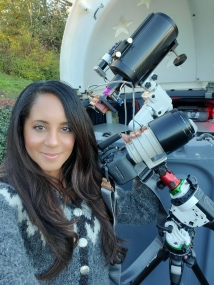
Kerry-Ann Lecky Hepburn Biography:
Kerry-Ann is a senior meteorologist for a 24-hour TV station in Canada and lives in the Niagara Region with her husband and two daughters. In her spare time, she enjoys flying small airplanes and volunteering with the Civil Air Search and Rescue Association.
Driven by a lifelong passion for astronomy and photography, she dedicates significant time to capturing deep-sky and Milky Way nightscape images. Her award-winning, widely published work has appeared in books, calendars, and magazines, and has been featured on prestigious platforms such as NASA APOD.
She has shared her expertise by leading international photo tours and giving talks for camera and astronomy clubs. With extensive experience judging astrophotography competitions, she is currently in her third year as a judge for the ZWO Astronomy Photographer of the Year, the world’s largest international astrophotography contest.
In a remarkable honour, an asteroid was recently named after her: 53258 Kerryannlecky (1999 FN).
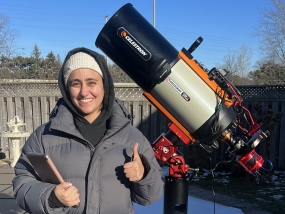
Noor Oada Biography:
Noor Oada is an astrophysicist whose research focused on the advanced visualization of planetary evolution models, bringing complex cosmic processes into clearer view. Now an active astrophotographer and astronomy educator, she connects communities to the night sky through both science and storytelling.
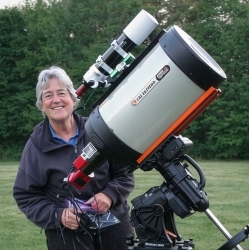
Marsha Wilcox Biography:
Marsha Wilcox is a photographic artist and educator based near Boston, Massachusetts. Her work ranges from intricate detail in the terrestrial world to the ancient light of unimaginably old, unfathomably distant, and incomprehensibly vast nebulae and galaxies in the night sky.
She received an MPS from the School of Visual Arts in New York in photography. Also a musician, she holds a Bachelor of Music degree, as well as master’s degrees in Special Education, Behavioral Research, Statistics, and Epidemiology. She earned doctorates in Behavioral Research from Columbia University and in Epidemiology from Harvard. Her post-doctoral fellowship was in Psychiatric Genetics at Harvard Medical School.
Wilcox has exhibited widely in galleries, museums and other venues in New England and beyond including the Griffin Museum of Photography, the Umbrella Arts Center, the Fitchburg Art Museum, The Art Center, Three Columns Gallery at Harvard, Boston Convention Center, and the Foley Gallery in NYC. Her work currently appears in the Big Picture Colorado 2025-27. Her images have been published in magazines and books including Art Scope and a collection published by LensWork, among others.
She received a first-place award in astrophotography in the Windows on the Universe exhibition at the Art Center. Her work, “Ancient Light” was a Critical Mass finalist in 2023.
Using telescopes as lenses with dedicated astronomy cameras and specialized filters, Wilcox collects the ancient light of celestial objects. Long exposure photography is the only way we can experience these scenes. In these images, there is art in the science, and science in the art.